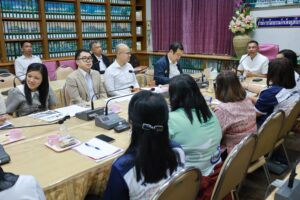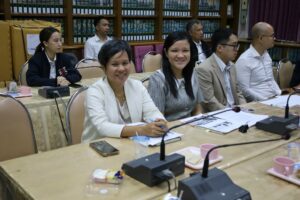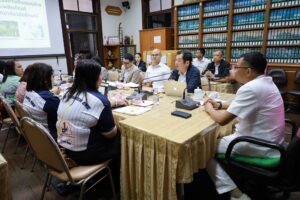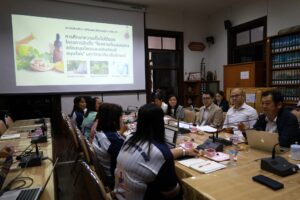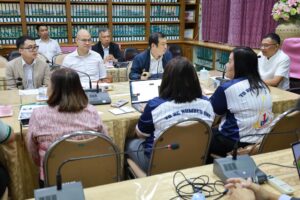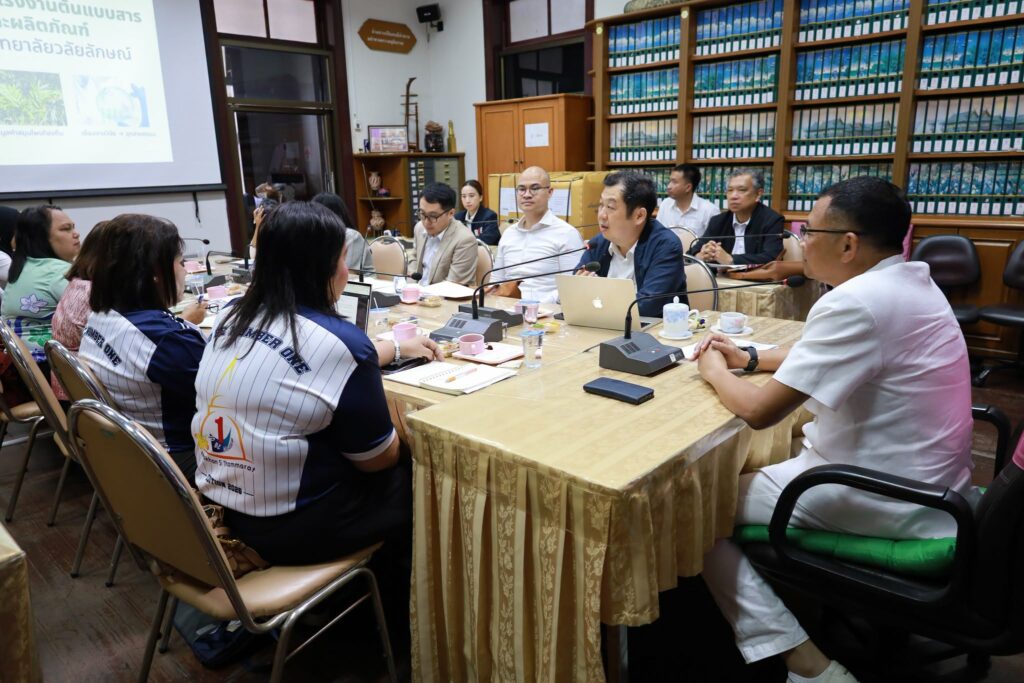
On November 4, 2026, at 9:00 AM, Mr. Sonthaya Kongchai, Head of the Facilities Division, attended a meeting with the Provincial Culture Office concerning the project to establish a “Prototype Plant for Herbal Extracts and Products.” The meeting, which focused on a feasibility study for this initiative at Walailak University, was chaired by Mr. Teerapong Chuaychu, Deputy Governor of Nakhon Si Thammarat. Attendees included representatives from government agencies, academics, researchers, and relevant stakeholders, who gathered to deliberate on strategies for developing and maximizing the potential of herbal resources within Nakhon Si Thammarat province.
This discussion represents a collaborative effort between Nakhon Si Thammarat province, the Institute of Research and Innovation for Excellence, and Walailak University. The objective is to explore the establishment of a prototype plant that will serve as a hub for the extraction and processing of herbal products. This facility aims to connect a network of local herbal farmers with researchers and the industrial sector—encompassing the entire value chain, from raw material production, quality and safety testing, and product formulation to manufacturing and market integration. This initiative is being driven under the “NAKHON SI SANDBOX” concept, envisioned as a central facility to support a community-based network for the cultivation and processing of herbal products. The initiative focuses on leveraging the province’s potential natural resources and medicinal plants—such as cardamom, nutmeg, gotu kola (centella), and mangosteen—to develop high-value products. This includes repurposing mangosteen peels, an agricultural byproduct, into extracts and herbal products with enhanced value through research and appropriate extraction technologies.
The development of a pilot plant will serve as a crucial mechanism for connecting the entire production chain: from farmers and local raw-material producers to centralized processing and extraction facilities, and finally to entrepreneurs and the herbal product market. The goal is to elevate production standards, create employment opportunities, increase farmers’ incomes, mitigate the impact of low agricultural commodity prices, and add value to local herbal resources. This aligns with the “Wellness Economy” trend and the growing domestic and international demand for herbal products. It also presents an opportunity to apply scientific knowledge, technology, and innovation to strengthen the grassroots economy, while ensuring the development of high-quality, standardized products.
Nakhon Si Thammarat Province is therefore pushing for a feasibility study for this project to lay a systematic foundation for the herbal industry—covering the upstream, midstream, and downstream sectors. The initiative aims to bridge the gap between research and commercial application, add value to local herbs, and ensure sustainable income distribution to farmers and local communities.
Source of news and images: Nakhon Si Thammarat Provincial Public Relations Office